Engineers Built an Ocean Monster Bigger Than the Empire State Building—Then It Blew Up
The largest ship ever built was too enormous for the world's canals, too slow to escape war, and too valuable to remain dead.
The welding torches of Yokosuka did not simply assemble a ship. They created something closer to an artificial continent.
When the vessel that would become the Seawise Giant reached its final form, it measured 458.45 meters from bow to stern. It was longer than the Empire State Building is tall and, fully loaded, displaced more than 657,000 tonnes.
It did not seem to float on the ocean. The ocean seemed to move around it.
Engineers had pushed maritime scale so far that they produced a machine too large for much of the planet built to serve it. Then war found it.
They Cut a Giant in Half
The tanker began life in Japan in the 1970s, but its original buyer refused delivery. Hong Kong shipping magnate C.Y. Tung acquired it and demanded something audacious: make it even bigger.
Engineers cut the already enormous ship apart and inserted a new central section. The operation, known as jumboization, transformed it into the largest self-propelled vessel ever constructed.
The result could carry more than four million barrels of crude oil. Its deadweight tonnage reached 564,763 tonnes. Loaded to its marks, its hull extended deep beneath the waterline.
That depth made the tanker a prisoner of its own size. It could not use the Panama Canal or the Suez Canal when loaded. Many ports could not receive it. The greatest merchant ship on Earth was forced onto the longest routes around it.
Steering It Was Like Moving a Glacier
The ship’s scale changed the meaning of navigation. Its turning circle stretched for kilometers, and bringing it to a complete stop required several miles of open water.
A captain did not react to what was immediately ahead. He had to anticipate where the world would be long before the ship arrived there.
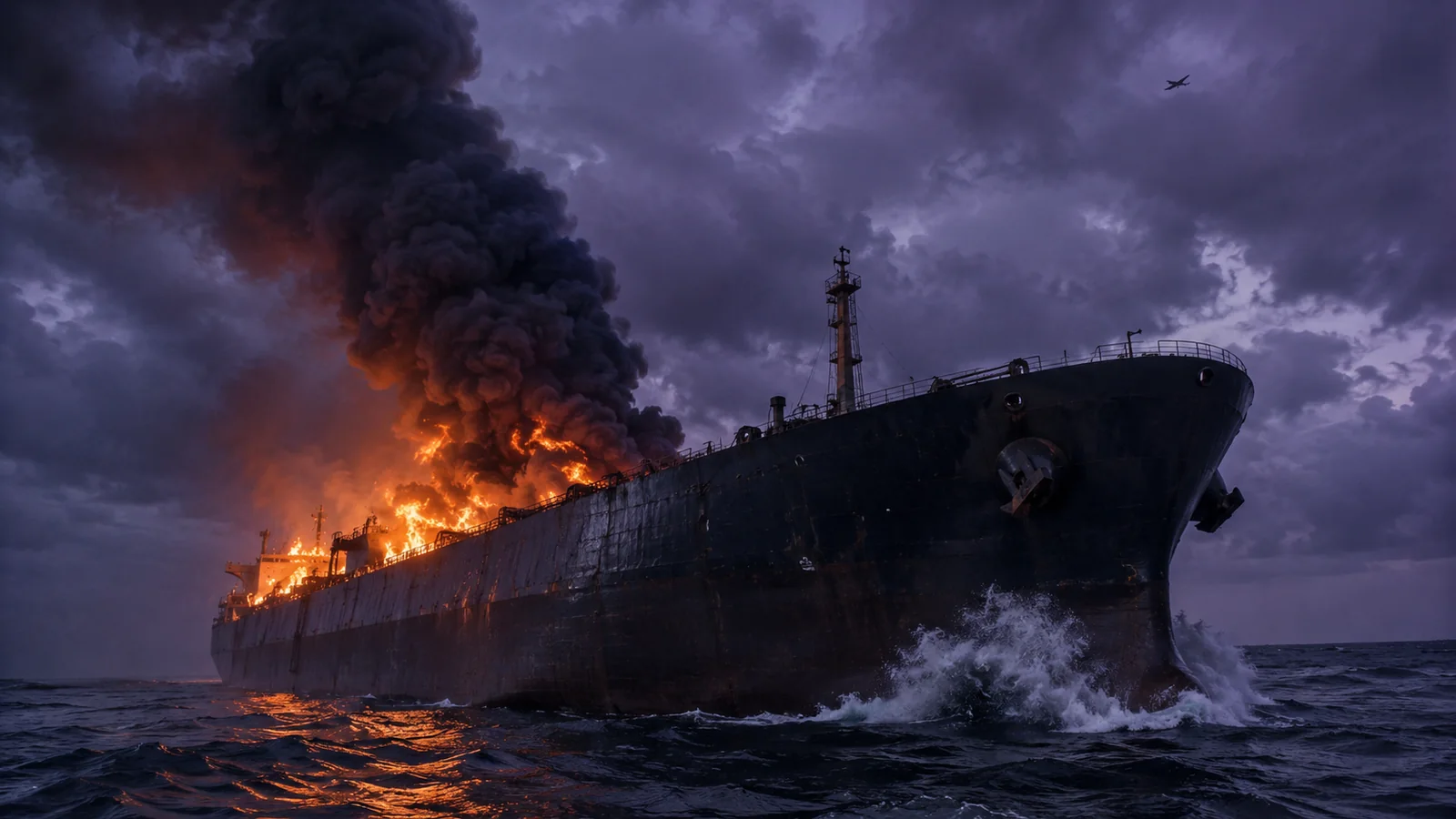
That weakness became terrifying during the Iran-Iraq War. On May 14, 1988, the tanker was anchored near Iran’s Larak Island when Iraqi aircraft attacked the terminal and the ships gathered around it.
Bombs tore into the Seawise Giant. Fire spread across the vessel, leaving the world’s largest ship burned, partly submerged in shallow water, and written off as a constructive total loss.
The ocean monster appeared dead.
Then They Brought It Back
Most ships would have ended there. This one was too valuable to abandon.
The wreck was purchased, refloated, and towed to Singapore. Thousands of tonnes of damaged steel were replaced. The resurrected tanker returned under a new name: Happy Giant. It later became Jahre Viking and finally Knock Nevis.
Its second life was quieter. As the economics and risks of ultra-large tankers changed, it eventually became a stationary storage vessel rather than a roaming giant.
In 2009, the ship made its final voyage to Alang, India. There, the largest self-propelled object humanity had ever placed in the sea was pulled onto a beach and dismantled piece by piece.
The Limit Was Not Engineering
Humans proved they could build a ship of almost unimaginable scale. The problem was everything surrounding it.
Canals were too narrow. Harbors were too shallow. Stopping took too long. One hull concentrated an immense quantity of cargo, capital, and environmental risk into a single target.
Modern shipbuilding did not abandon giants. It changed what giants were designed to do. Cruise ships use enormous internal volume. Container ships maximize standardized cargo. The Pioneering Spirit uses a twin hull to lift entire offshore platforms.
The Seawise Giant remains different. It was not merely a large ship. It was the moment engineers discovered that humanity could build beyond the scale the rest of civilization was prepared to accommodate.