
The Trillion-Dollar Premium: What SpaceX's IPO Says About Modern Markets
SpaceX's record debut shows how aggressively investors will price future dominance before the underlying economics have caught up.
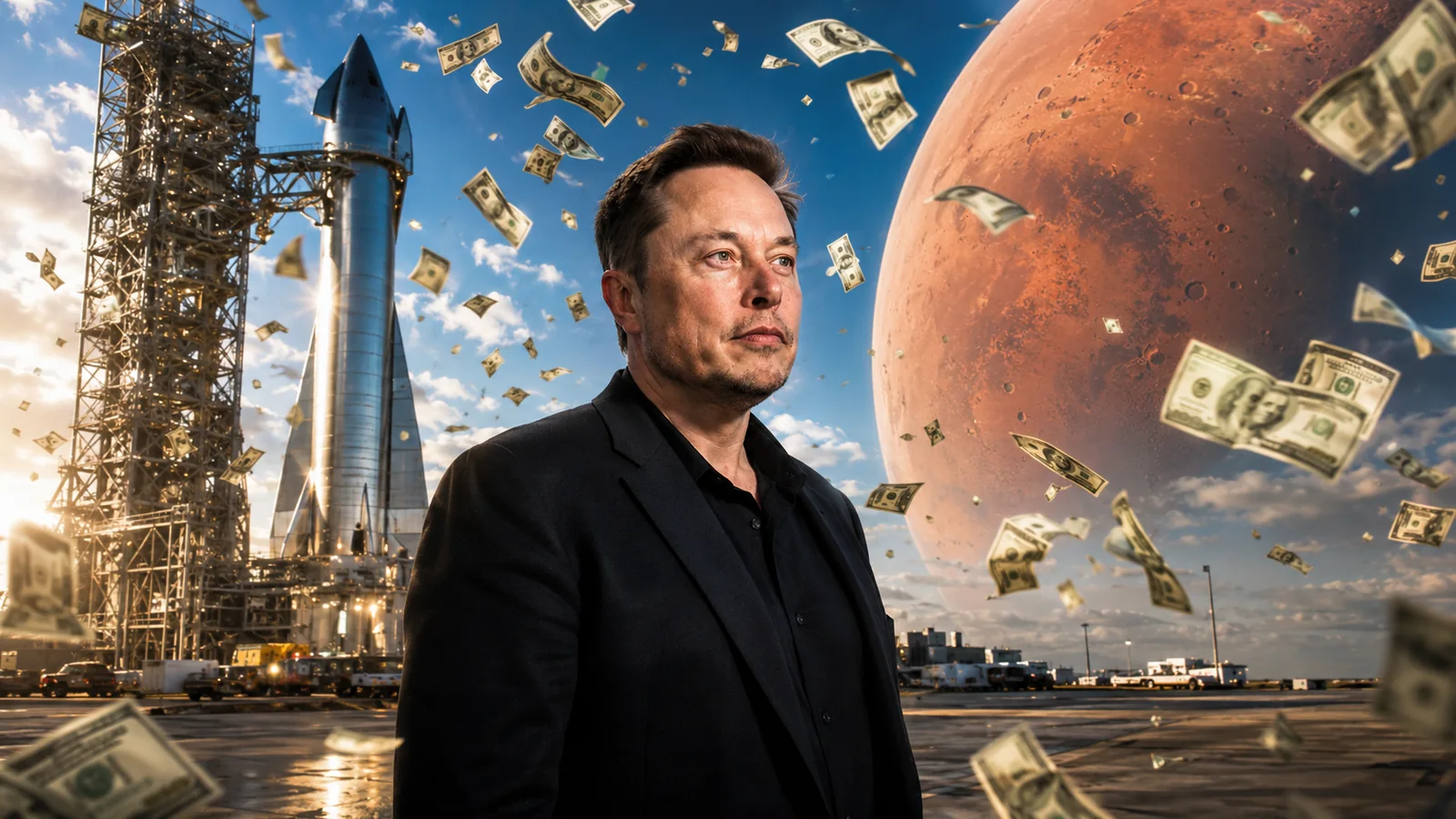
SpaceX did more than complete the largest initial public offering on record. Its first day of trading showed how far public markets are willing to look beyond present earnings when a company offers dominance, technological ambition, and a compelling story about the future.
The company priced its offering at $135 a share and raised roughly $75 billion. Public trading opened at $150, and the stock closed at $160.95, giving SpaceX a market value of about $2.1 trillion.
That valuation placed a company with substantial operating losses among the world’s most valuable public businesses. The important question is not simply whether investors paid too much. It is what, exactly, they believed they were buying.
The Evidence
SpaceX entered the market with assets few competitors can match. Its launch business has unusual scale, Starlink has created a global satellite network, and the company now combines aerospace infrastructure with artificial intelligence ambitions.
Investor demand was strong enough for the offering to be several times oversubscribed, according to reports cited by the Guardian. The debut also made Elon Musk the first person estimated to hold a net worth above $1 trillion, although that figure remains largely tied to market valuations rather than liquid wealth.
The enthusiasm sits beside a more difficult financial picture. The Guardian reported that SpaceX generated $18.7 billion in revenue last year while recording a $4.3 billion operating loss. Public investors are therefore assigning most of the company’s value to expected future expansion rather than current profitability.
Control is another part of the calculation. Musk retains overwhelming voting power, limiting the influence of ordinary shareholders over strategy, governance, and capital allocation. Investors accepted that imbalance rather than demanding a meaningful discount for it.
What the Market Is Pricing
The IPO suggests that investors are valuing SpaceX as an interconnected platform rather than a conventional aerospace manufacturer.
That platform includes launch services, satellite communications, artificial intelligence, social media infrastructure, and the possibility of future space-based computing. Each component offers a different path to revenue, but many of the largest opportunities remain technically difficult, capital-intensive, or commercially unproven.
This is the premium at the center of the listing. The market is paying not only for demonstrated capabilities but also for the possibility that SpaceX becomes foundational infrastructure for several future industries at once.
Such pricing is not automatically irrational. Dominant technology companies often appear expensive before their strongest markets fully develop. But the wider the gap between present performance and future expectations, the more sensitive the valuation becomes to delays, execution failures, or changing investor sentiment.
Why It Matters
SpaceX’s debut may influence how investors approach the next generation of large technology listings. OpenAI, Anthropic, and other capital-intensive artificial intelligence companies will be judged against a market that has now demonstrated an appetite for exceptionally ambitious projections.
The listing also moves risk from private investors into public portfolios. As SpaceX becomes eligible for major market indexes and investment products, exposure may spread to funds held by retirement savers and institutions that did not make a direct decision to buy the company.
That does not make the stock uniquely dangerous. It does mean the consequences of its valuation will extend beyond investors who actively chose to participate in the IPO.
The Other Side
The strongest case for the valuation begins with execution. SpaceX has repeatedly turned projects once considered unrealistic into functioning businesses and infrastructure. Its launch cadence, reusable rockets, and Starlink network provide evidence that the company can deliver difficult engineering programs at scale.
The bearish case is that past execution does not guarantee that orbital data centers, mass-market space services, or rapidly expanding artificial intelligence revenue will become profitable on the timetable implied by the share price.
Both views can be true: SpaceX may be an exceptional company, and its valuation may still leave little room for disappointment.
What to Watch Next
- Quarterly losses and cash use: Investors will need evidence that revenue growth can eventually outpace the cost of launch, satellite, and AI expansion.
- Starlink economics: Subscriber growth, margins, and infrastructure spending will show whether the company’s most mature business can support its broader ambitions.
- Governance: Any conflict between Musk’s companies, political activity, and public shareholders could test the market’s willingness to tolerate concentrated control.
- Index inclusion: The speed and scale of passive-fund buying will show how quickly SpaceX becomes embedded in ordinary portfolios.
- Future technology IPOs: Pricing for OpenAI, Anthropic, and other expected listings will reveal whether SpaceX was an exceptional event or the beginning of a wider valuation reset.
SpaceX’s first trading day did not prove that traditional financial analysis no longer matters. It showed that markets are willing to postpone that judgment when the perceived prize is large enough.